Let's Go Jim!
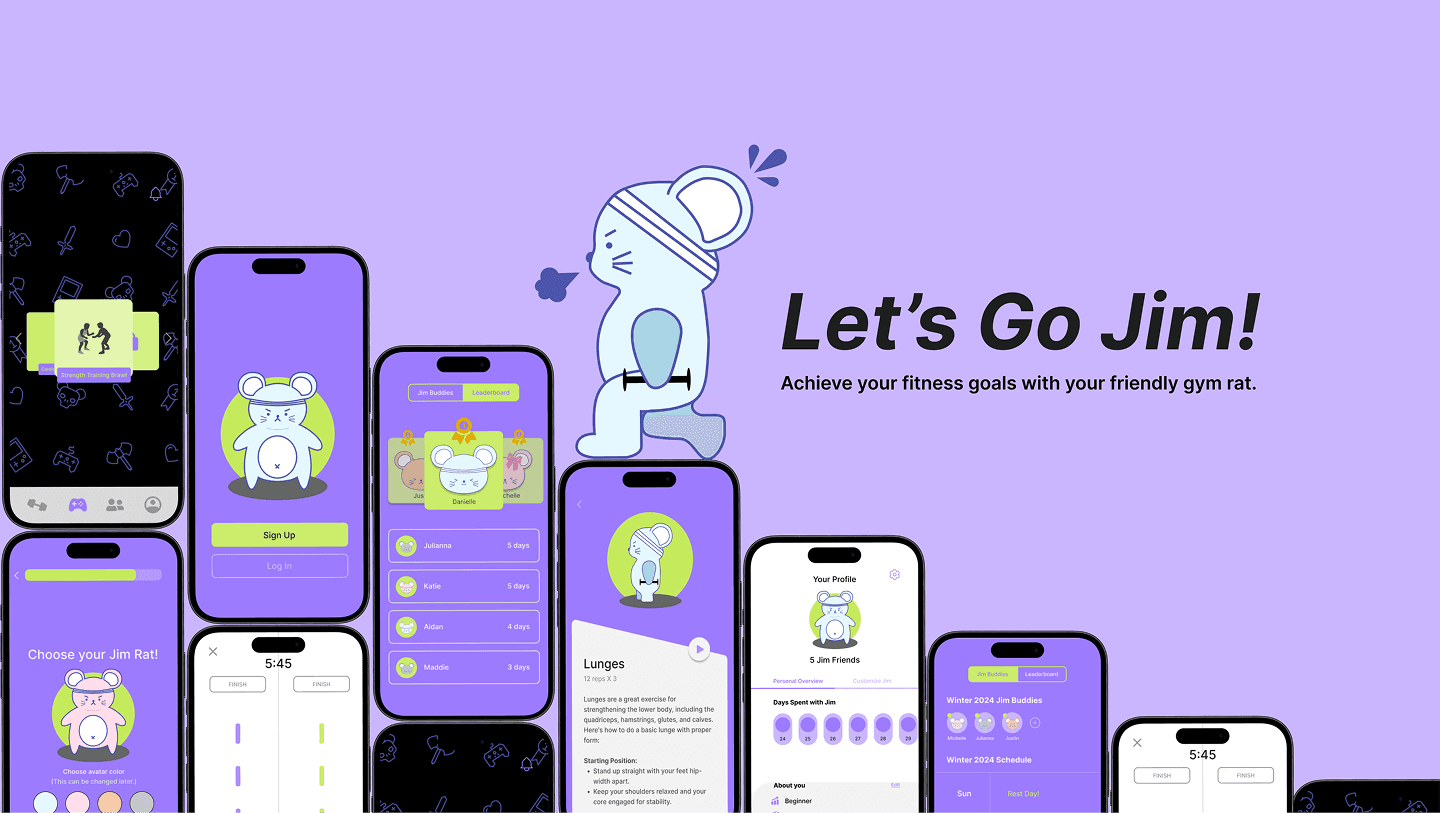
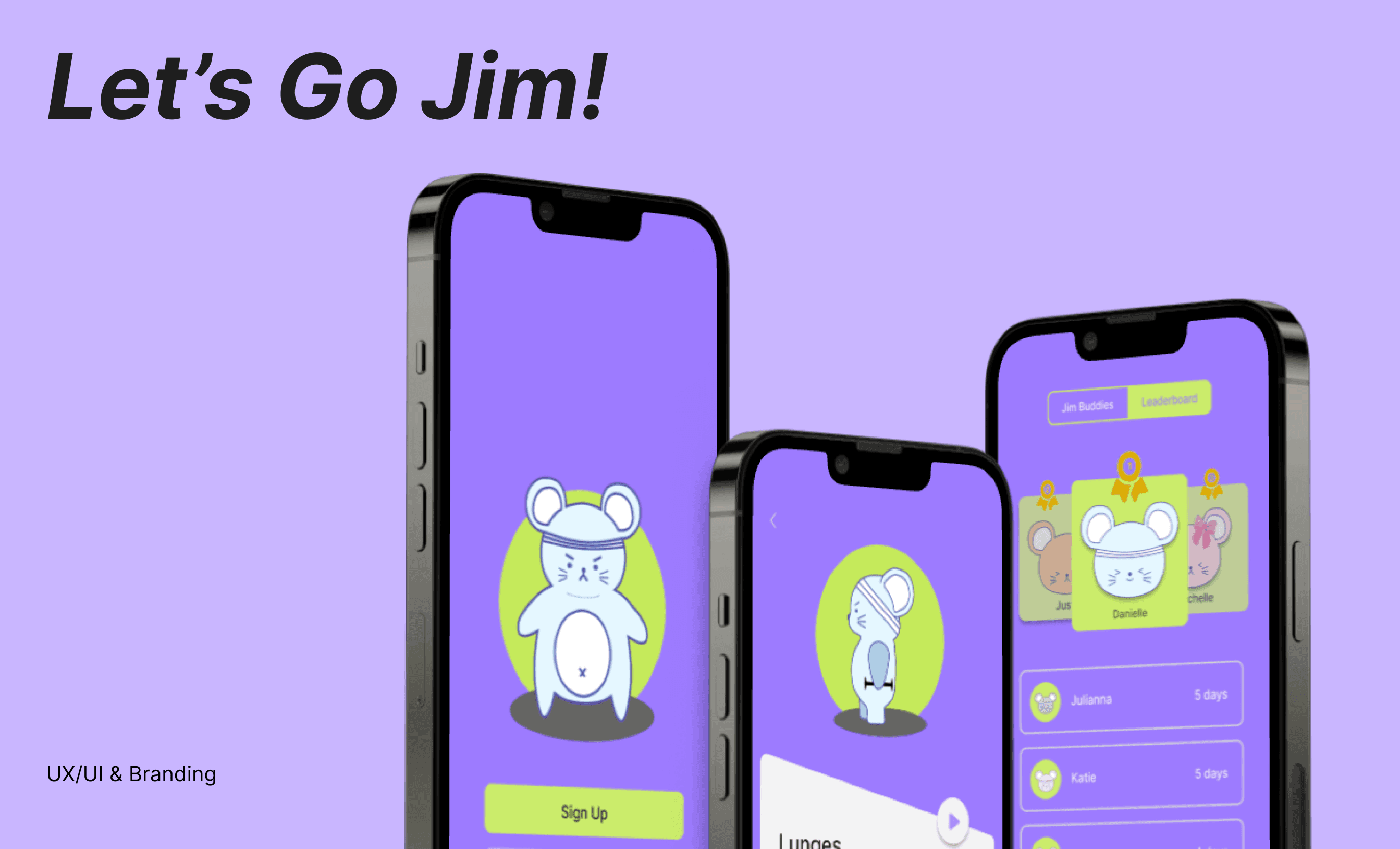
A social fitness app that helps people stay consistent at the gym through accountability and motivation.
let's go jim
problem
Many people struggle to stay consistent with going to the gym, even when they’re motivated to improve their fitness. Traditional fitness apps focus heavily on workouts and metrics, but don’t address the lack of accountability and social motivation that often causes people to fall off routine.
solution
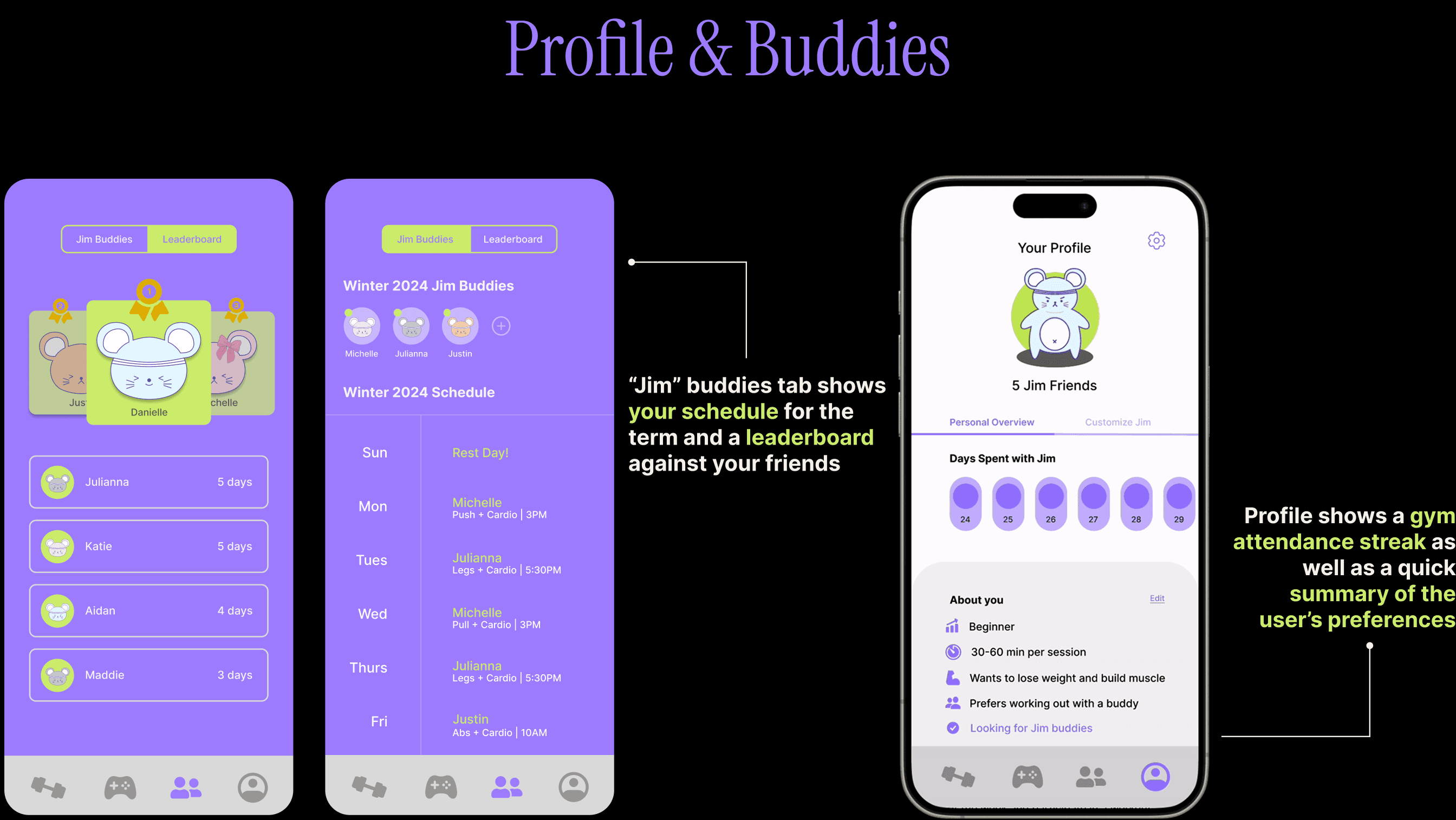
Let’s Go Jim! encourages consistency by turning gym attendance into a social experience. The app uses features like check-ins, friend visibility, and streaks to create accountability and motivation, helping users build sustainable fitness habits through community support rather than pressure.
year
2024
timeframe
3 days
tools
Figma, Adobe
team
3 Designers
category
Consumer Mobile App + Social Fitness + Habit Building
Key Contributions
Played a key role in
user research and synthesis, shaping the direction of the productFocused on making the experience feel cohesive by refining
flows and interactions across screensDesigned all
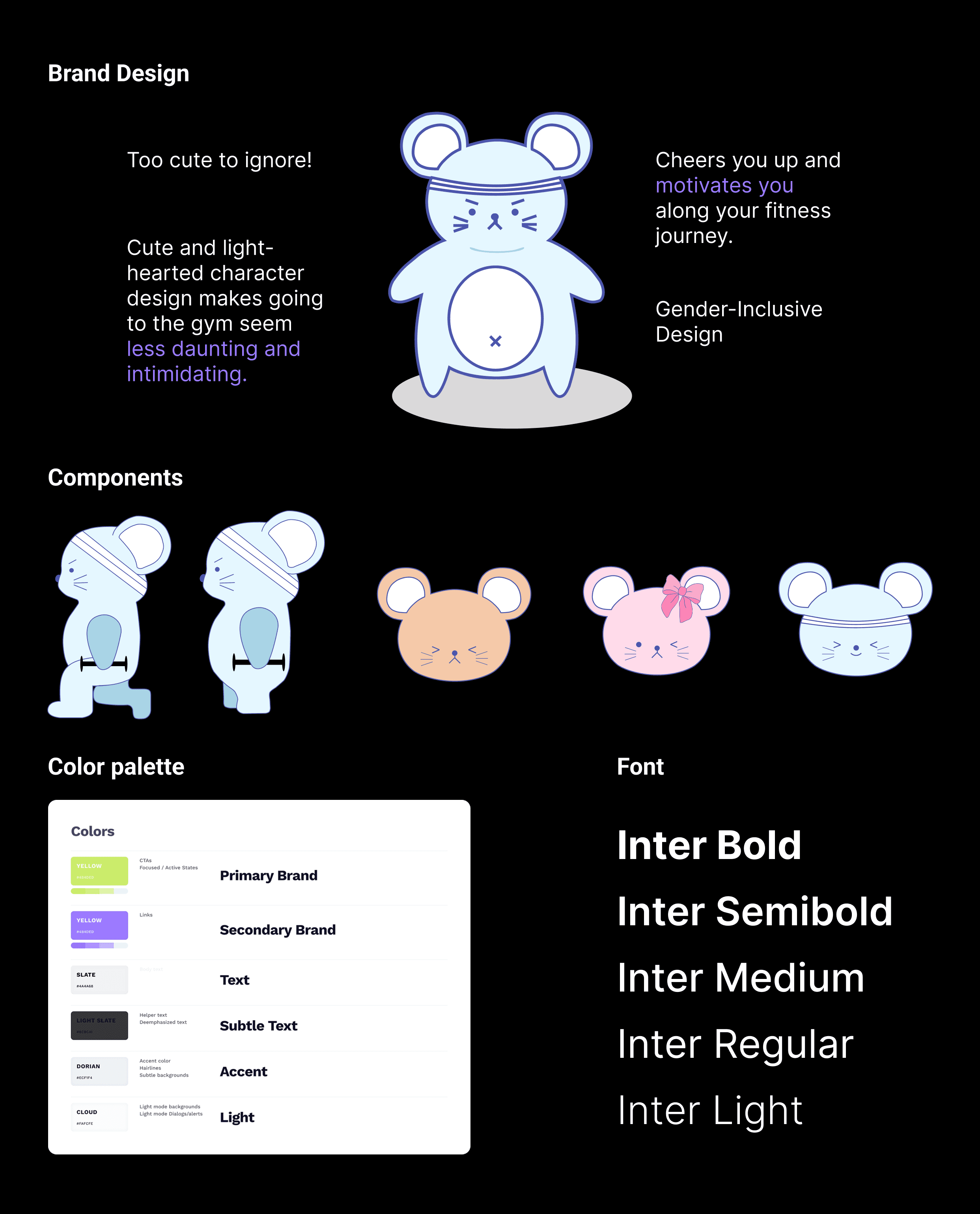
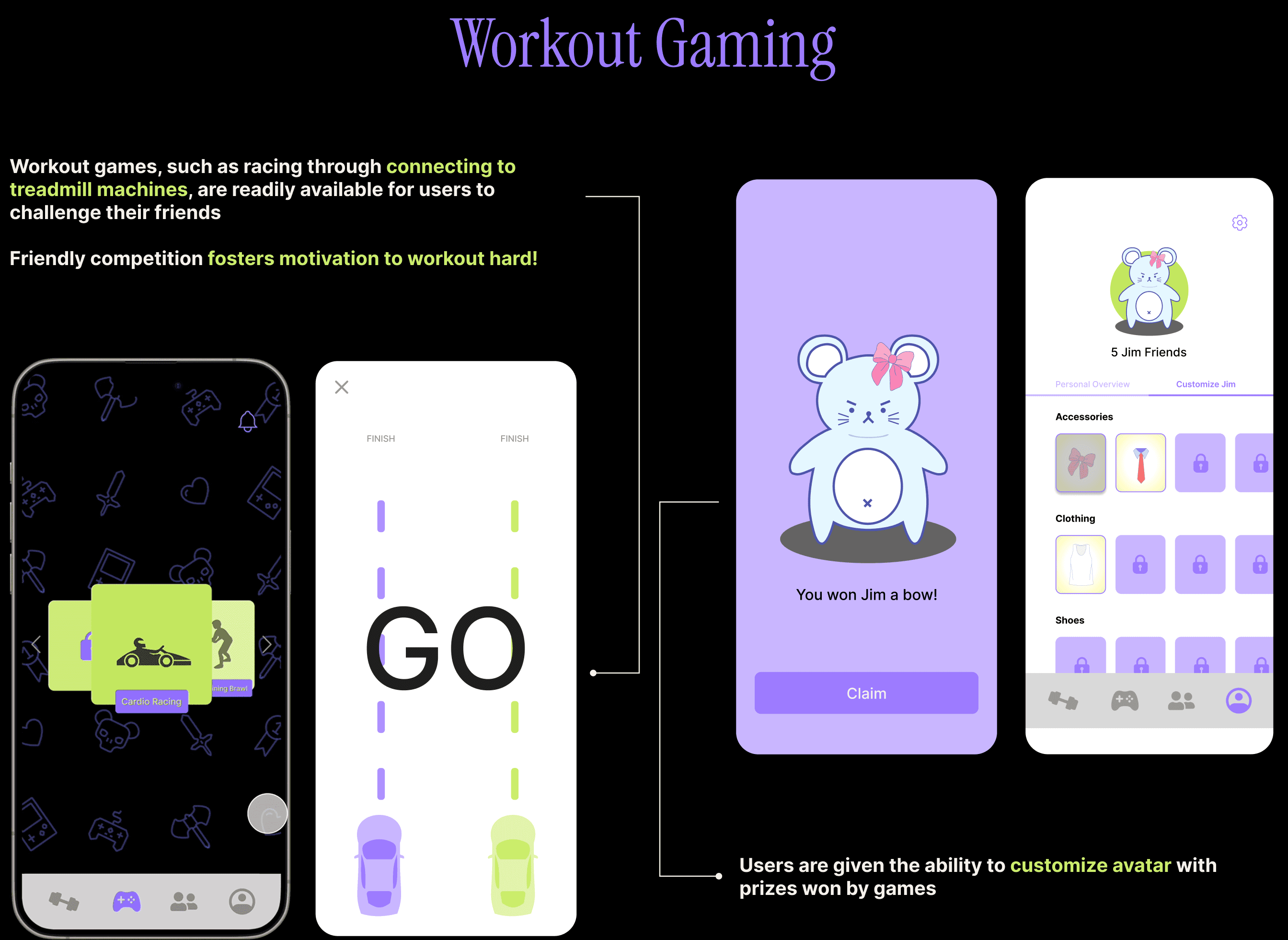
visual assets,graphics,and illustrations,including Jim and the app’s personalityDeveloped the
gamification elementsthat drove engagement and motivationSupported
prototyping across multiple flows, refining interactions and screen transitions
Research (Methods + Insights)
Methods
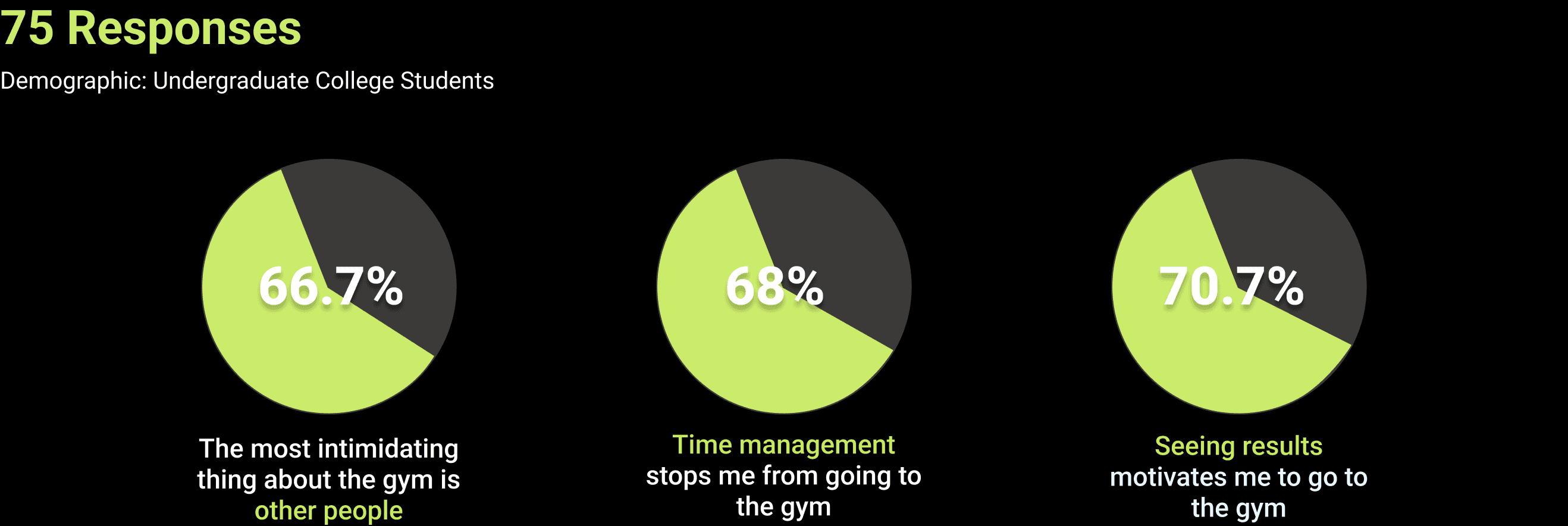
Survey with 75 respondents
User interviews
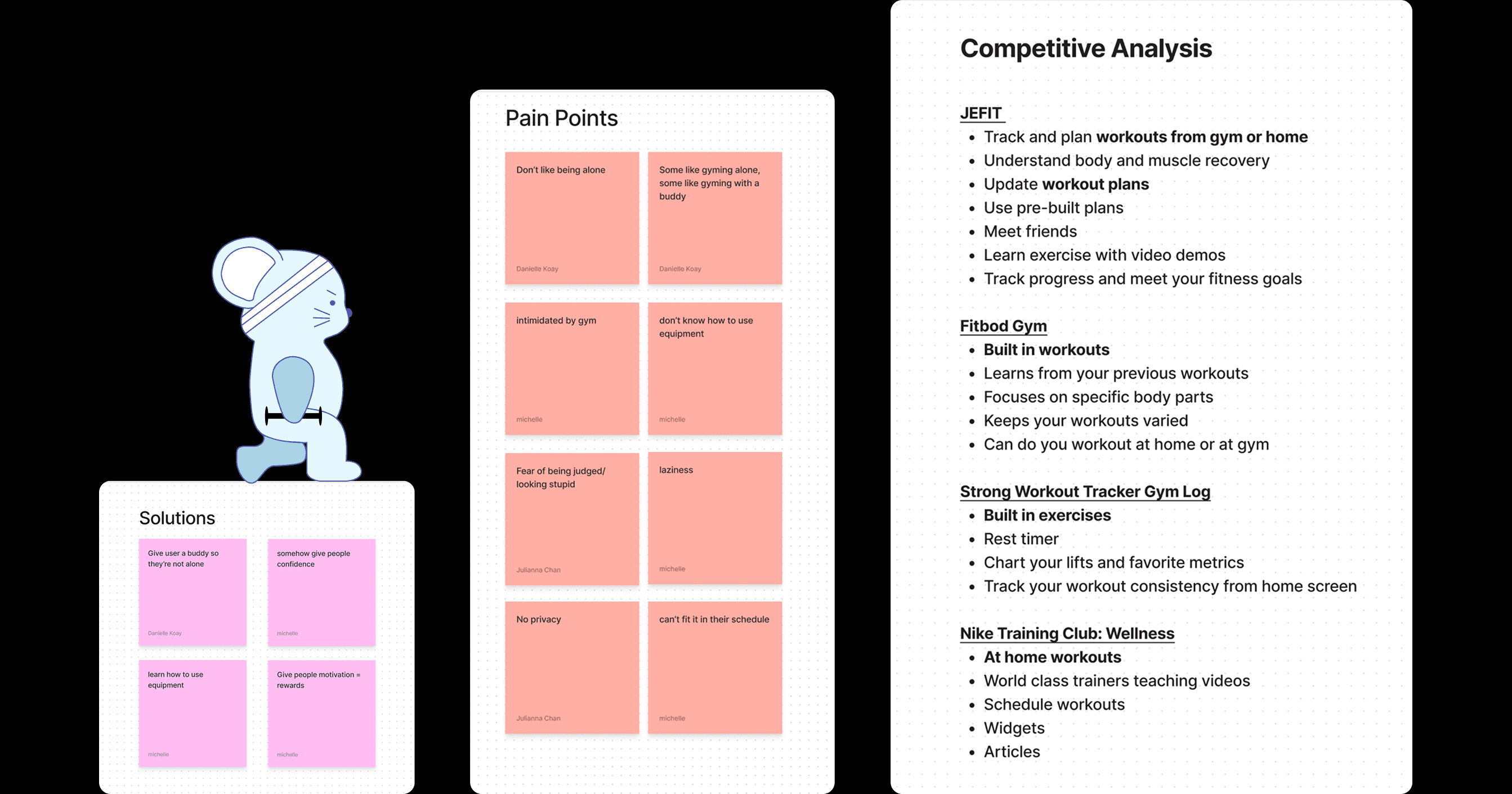
Competitive analysis of fitness and wellness apps (Nike Training Club, JEFIT, Fitbod, etc.)
Pain point mapping and synthesis
Key Insights
Students are more likely to engage when the experience feels fun, friendly, and low-judgment
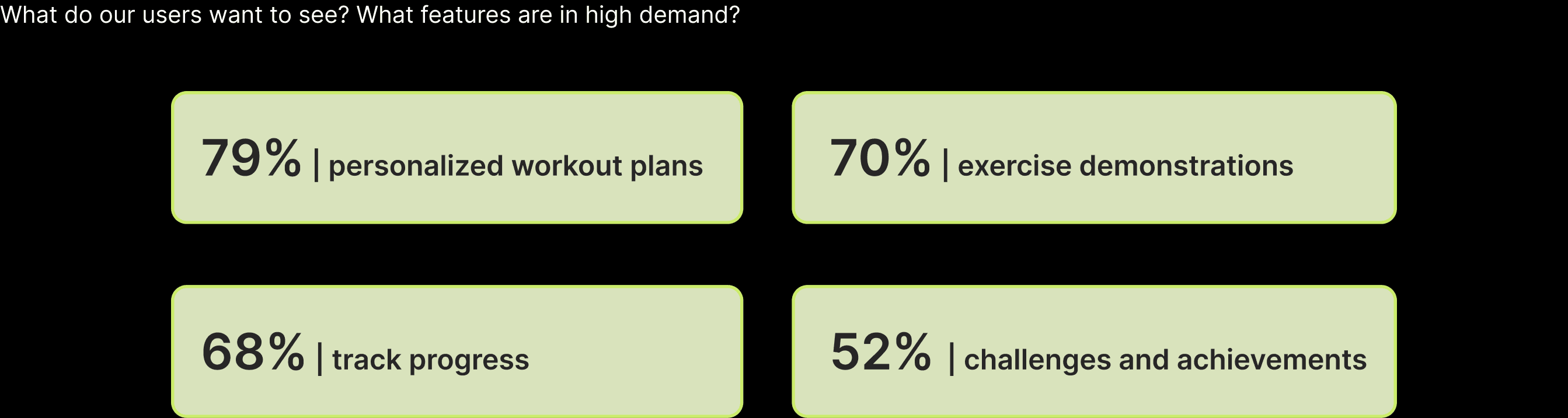
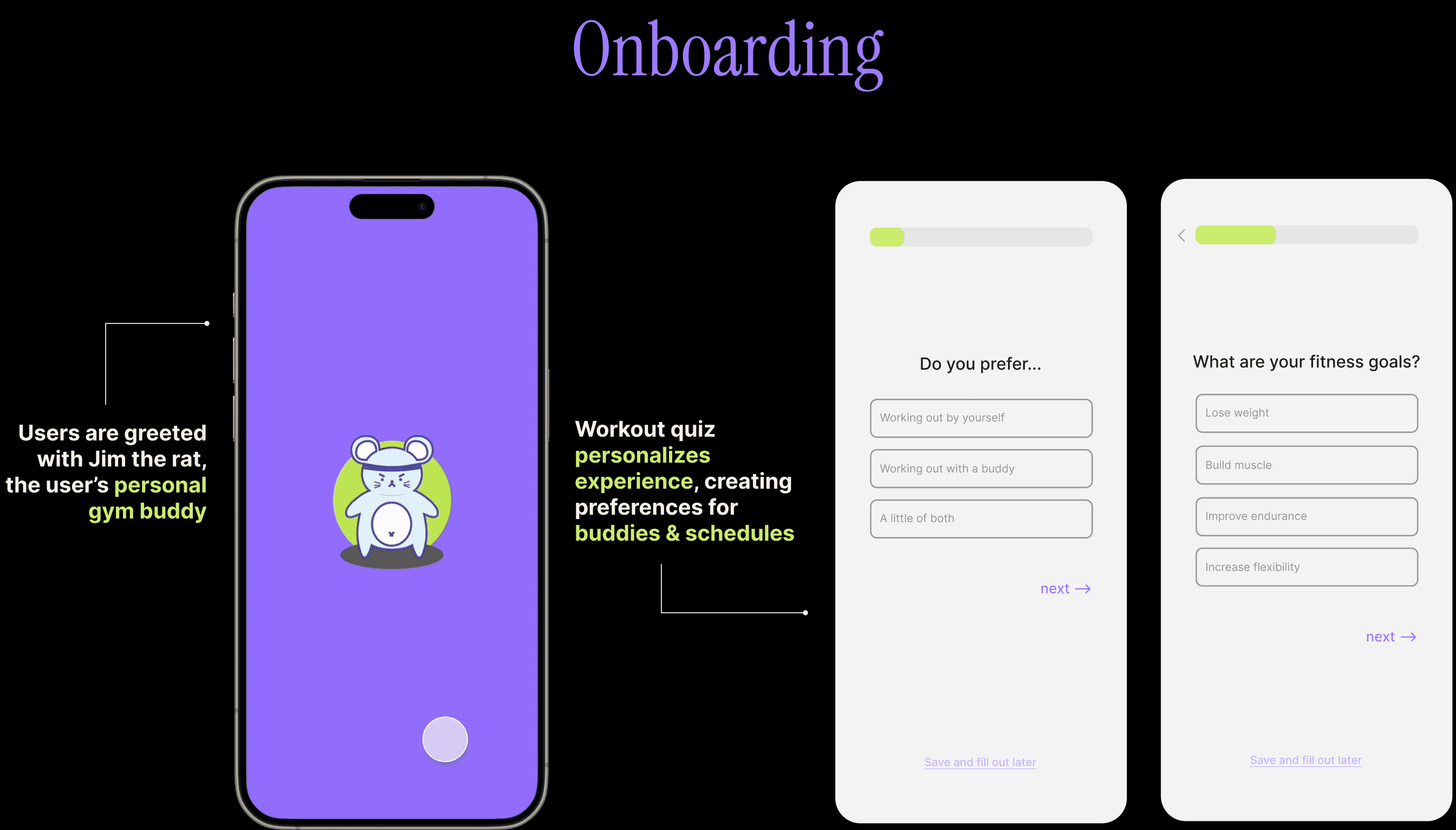
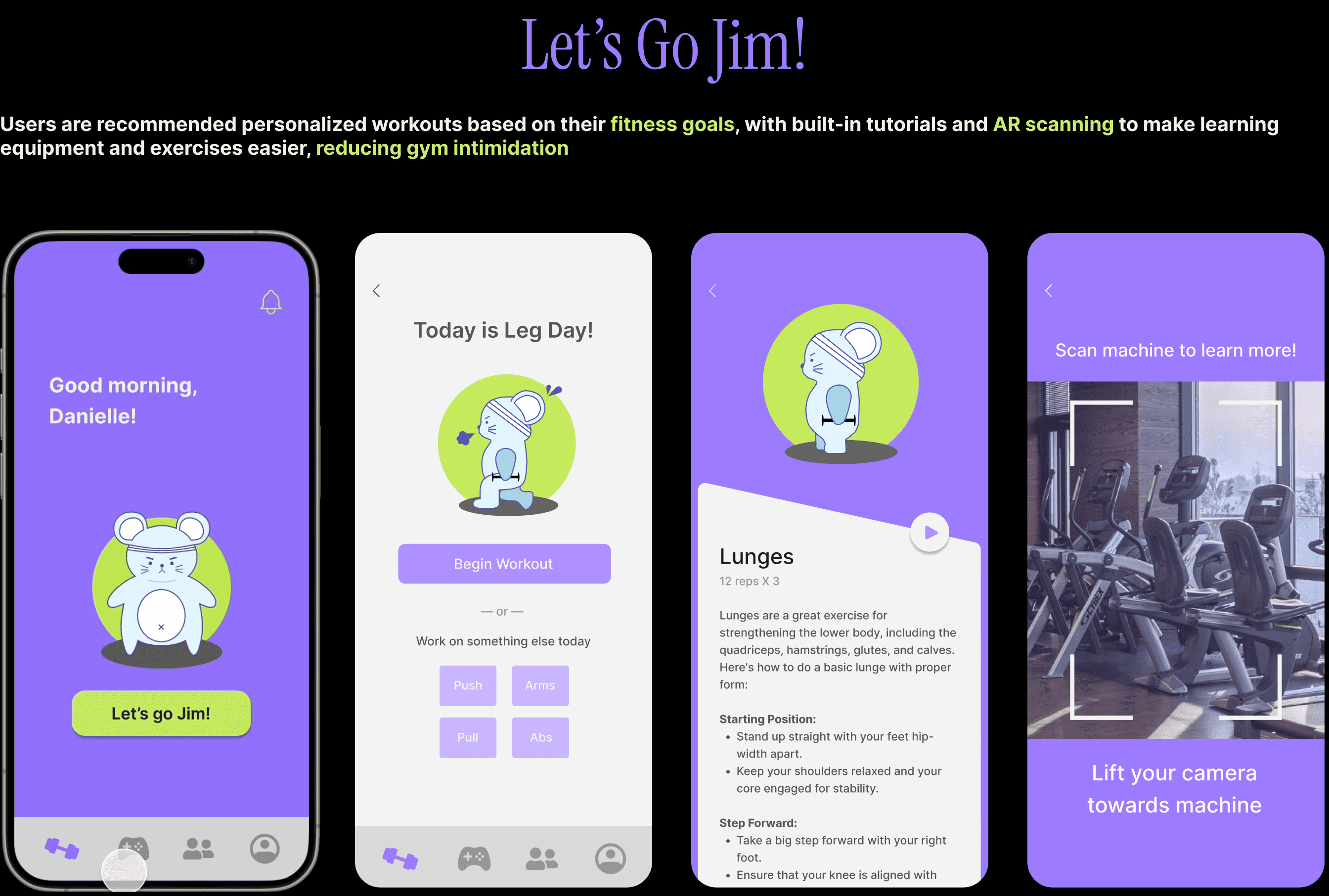
Process/ Stategy
After research, we focused on turning insights into clear direction.
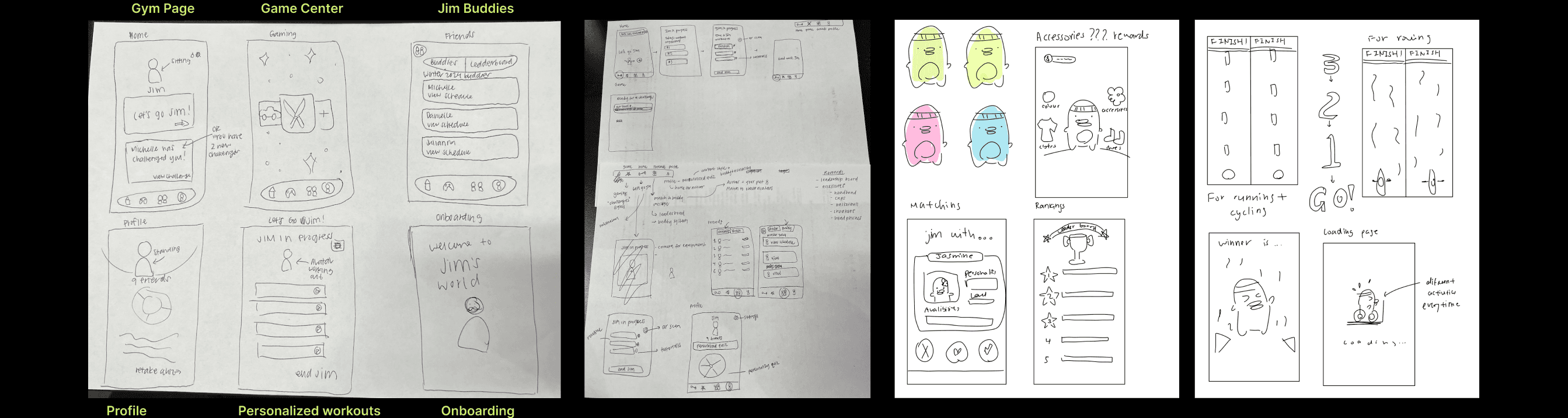
We:
Synthesized survey + interview data
Mapped key pain points and opportunities
Identified patterns across user needs
Core pain points we focused on
Gym intimidation and fear of judgment
Low motivation and inconsistency
Overwhelming fitness apps
Key opportunities we designed toward
Make fitness feel social, not stressful
Use light gamification to support consistency
Build trust through tone, visuals, and simplicity
We framed key “How Might We” questions that guided the product:
How might we reduce fear of judgment?
How might we make motivation feel fun?
How might we encourage consistency without guilt?
These questions shaped the app’s personality, features, and overall experience.
Conflict & Resolution
Challenge 1: “This product has been done a hundred times”
Fitness apps are everywhere. The risk was building something generic.
How we approached it differently:
Let research drive decisions instead of trends
Built a strong product personality through Jim
Used light gamification instead of heavy tracking
Focused on emotional barriers (fear, intimidation, motivation), not just features
This helped us design something that felt more relatable and human.
Challenge 2: Tight timeline (3 days)
We built the entire project under intense time pressure.
What helped us stay strong:
Split responsibilities across the team
Switched tasks throughout the process to keep fresh perspective
Constantly shared work and updated each other
Made fast decisions instead of over-polishing early
Instead of slowing us down, the tight timeline kept us focused on making smart, practical decisions.
Wrap-Up
My Takeaways
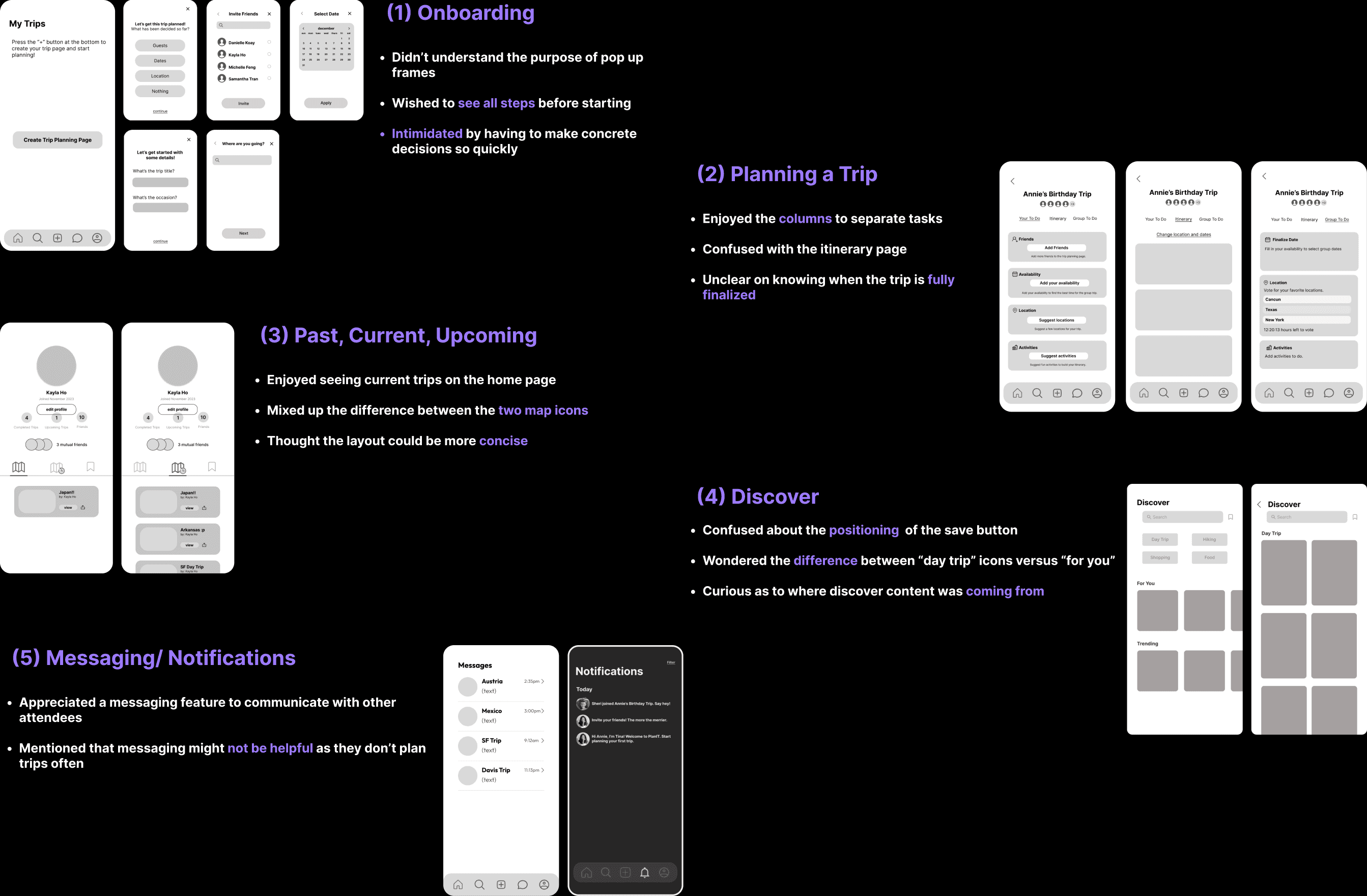
Small visual inconsistencies can create big usability problems.
Users often need clearer guidance than expected, especially in feature-heavy apps.
Iteration is essential. Early assumptions rarely match real user behavior.
Testing with a diverse group of users helps uncover blind spots in the design.
Next Steps
Strengthen onboarding with short tutorials, tooltips, and clearer guidance.
Build a more polished and reusable design system for long-term consistency.
Run A/B tests to compare updated flows and measure user engagement.
Explore additional motivational features (rewards, streaks, challenges) to support fitness goals.